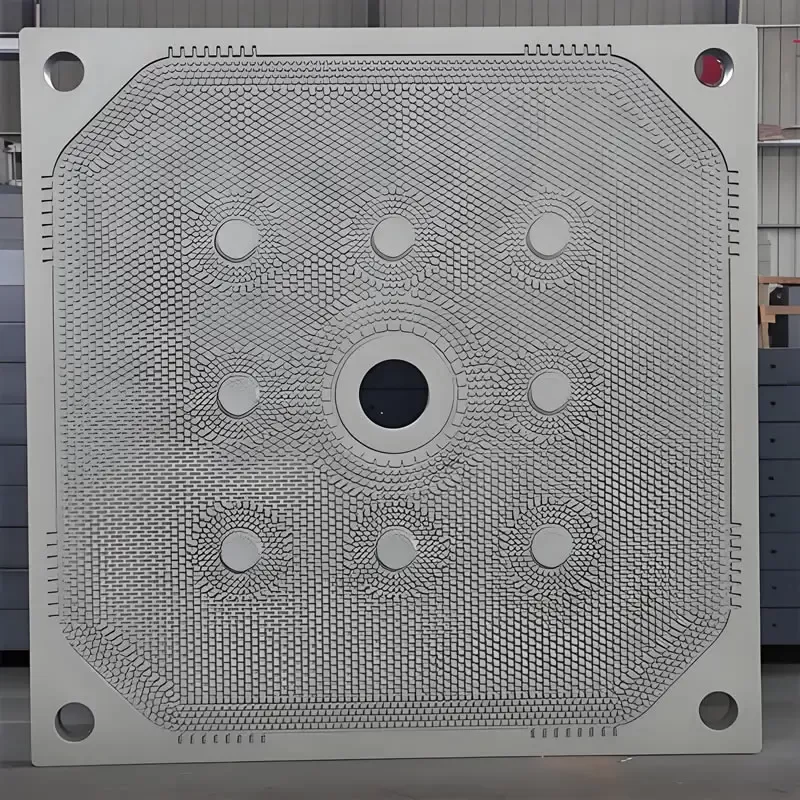
Among various filter plate materials for filter presses, Polypropylene (PP) filter plates
maintain the highest market share. While they lack the high strength of
cast iron plates or the superior cleanliness of stainless steel plates,
PP plates excel through a combination of unique advantages that deliver
exceptional value across diverse industrial applications.
Key Advantages of PP Filter Plates
1. Lightweight Design for Easier Handling & Maintenance
Material Density: PP has a density of only 0.91 g/cm³.
Weight Comparison: A PP filter plate of the same specification weighs approximately: 1/3 the weight of a cast iron plate,1/2 the weight of a stainless steel plate
2. Superior Chemical Corrosion & Rust Resistance
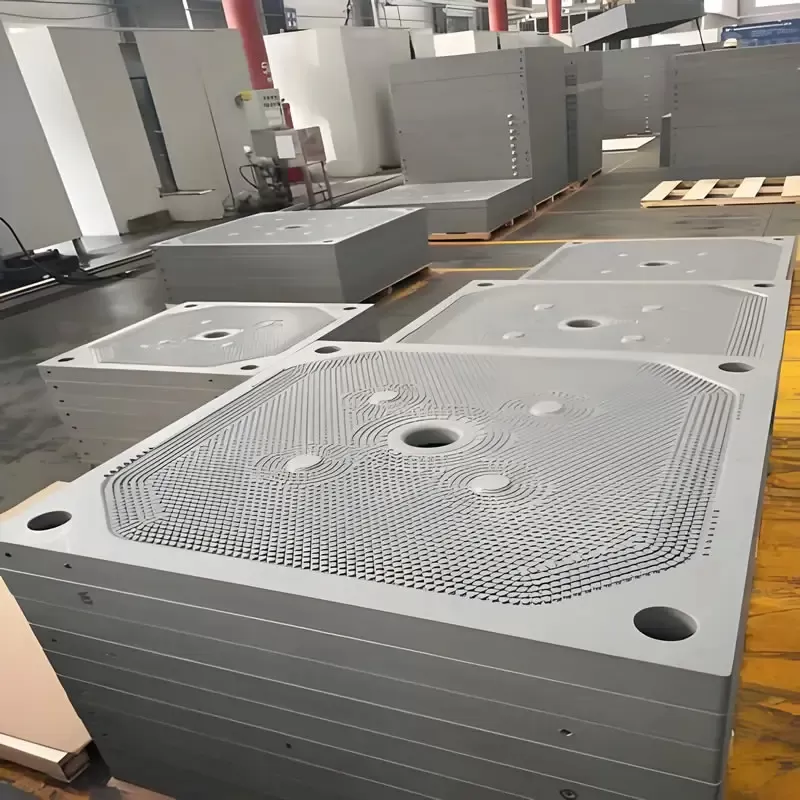
Inherent Chemical Stability: As a high-polymer material, PP exhibits excellent chemical inertness.
Broad Compatibility: Resists corrosion from a wide range of acids, bases, and salts, making it suitable for filtering many complex, aggressive slurries without degradation.
No Rusting: Unlike metal plates, PP is immune to rust, eliminating a common failure mode in humid or wet environments.
3. Consistent Filtration Performance & Excellent Cake Release
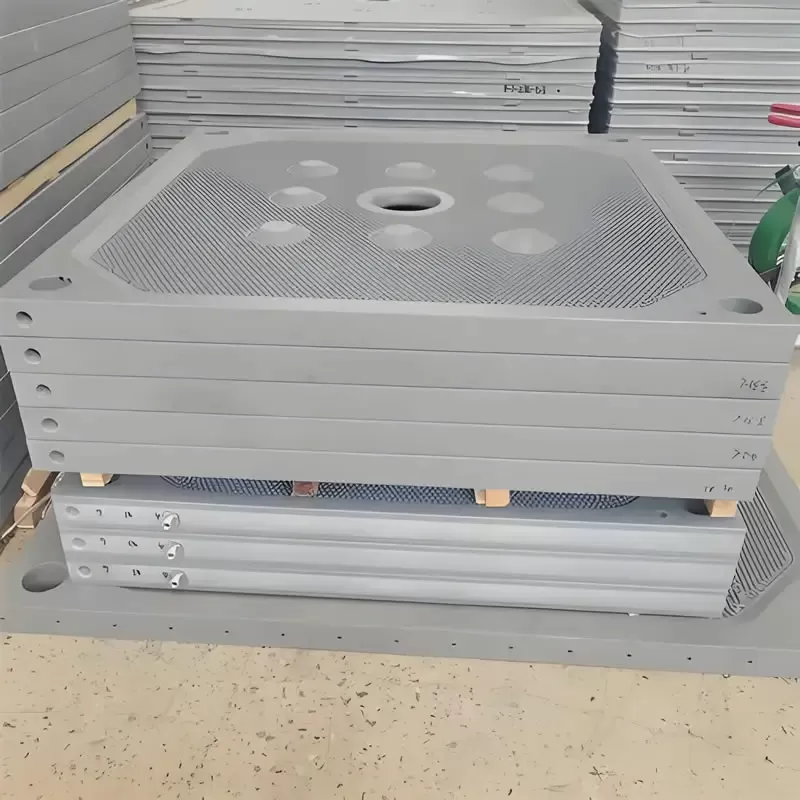
Smooth Surface Finish: Provides easy cake release, reducing cycle time and minimizing residual cake buildup.
Reliable Sealing: Maintains consistent sealing integrity over long service periods.
Adaptable Filtration Precision: Can be manufactured with varying pore structures to suit different separation requirements.
4. Unbeatable Cost-Effectiveness & Economic Value
Low Initial Investment: PP plates have significantly lower purchase costs compared to metal alternatives.
Controlled Replacement Costs: Affordable pricing makes inventory management and plate replacement budget-friendly.
Reduced Maintenance Expenses: Corrosion resistance and durability minimize unplanned maintenance and associated downtime costs.